

4 Switch 1 Light Control Wiring
A wiring diagram showing how to control one light using four different switches from different locations. Ideal for staircases or long corridors.

multiple switch one light
A 1-light, 4-switch circuit connection can enable you to switch a light on or off at any of four switches. This is done by use of two (2) 2-way (SPDT) switches and two intermediate switches (DPDT or 4-way). This installation is often in a large hall or staircase when there are several access points to the light in question. The wiring layout and the way the switches link are imperative to shun confusion or short circuits. The simplified explanation and diagram are given below, which can be followed easily.
Basic Formula for 4 switch one light:
Basic Wiring Logic:
- Switch 1: 2-way switch
- Switch 2: Intermediate switch
- Switch 3: Intermediate switch
- Switch 4: 2-way switch
- Light is connected between L (Live) and N (Neutral), passing through the switch chain.
Wiring Formula Summary:
Total Wires Needed = 1 Live + 1 Neutral + 3 Traveler Lines
Intermediate switches cross-connect traveler lines.
4-way light wiring diagram
This way of wiring lets a single light be controlled at four independent points with a combination of 2-way switches (2) and intermediate (4-way) switches (2). It works well in long corridors, on stairs, or even in large rooms where there is a need to control light at different points. In multi-access areas, this setting enhances facility and energy saving. A 4-switch arrangement is safe and performs smoothly when properly planned and the excess wiring is less.
multi-point light control wiring diagram
| Switch | Type | Connection |
|---|---|---|
| Switch 1 | 2-Way | Live In + 2 Travelers |
| Switch 2 | Intermediate | 2 Travelers In + 2 Out |
| Switch 3 | Intermediate | 2 Travelers In + 2 Out |
| Switch 4 | 2-Way | 2 Travelers + Load Out to Light |
Frequently Asked Questions - 4 Switch 1 Light Control Wiring:
What is a 4 switch 1 light wiring diagram?
It shows how to control a single light from four switches using 2-way and intermediate switches.
Can I use only 2-way switches for 4-point control?
No, you need two intermediate switches along with 2-way switches for proper 4-point control.
Where is this wiring commonly used?
In long corridors, staircases, or large halls where multiple access points are needed.
How many wires are required?
Typically, 5 to 7 wires depending on layout: Live, Neutral, and multiple travelers.
What is an intermediate switch?
It is a 4-way switch that connects or crosses over the traveler wires between two 2-way switches.
Is a neutral wire needed in the switch box?
Usually not in switch boxes, but it's necessary in the light box.
Is this setup safe for high-wattage lights?
Yes, if the wiring and switches are rated properly for the load.
Can I use smart switches in this setup?
Yes, but you may need specially compatible 4-way smart switch systems.
Does the wire color matter?
Yes, follow standard electrical color codes for safety and clarity.
Can I DIY this wiring?
Yes, with basic electrical knowledge, but professional installation is recommended for safety.
Related Posts
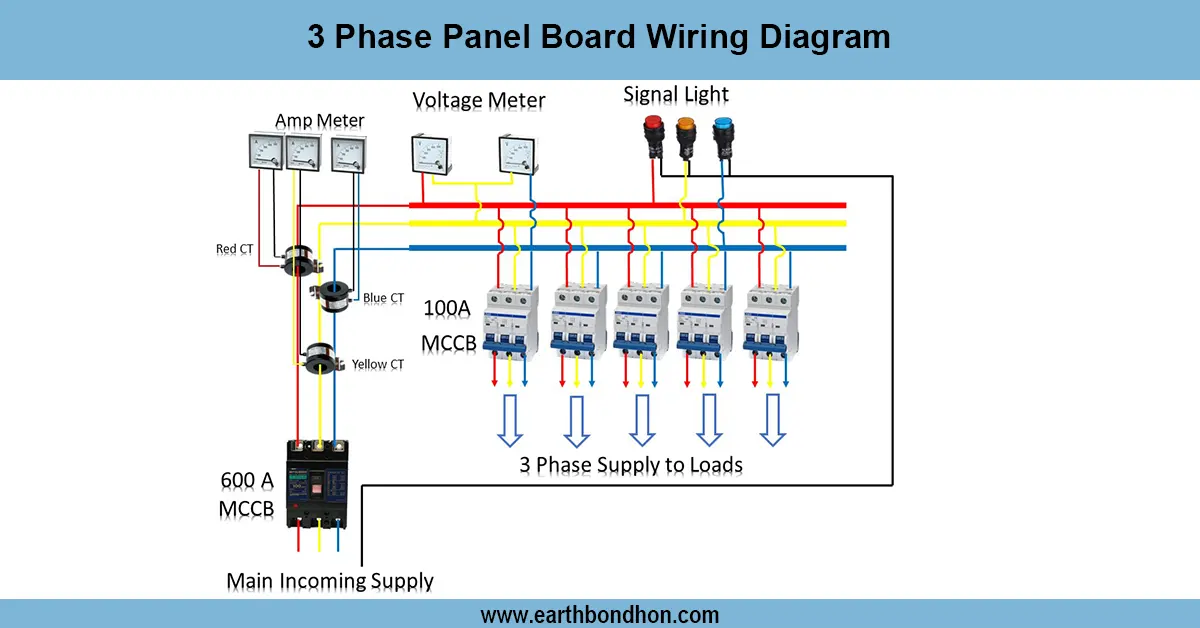
3 Phase Distribution Board in MCCB Wiring
Detailed 3-phase panel board wiring diagram showing connections of breakers, busbars, meters, and load distribution for safe and efficient power management.

Single Phase House Wiring Diagram
Understand single-phase house wiring diagrams with clear steps for safe, efficient, and reliable home electrical connections.

Corridor Wiring Circuit Diagram
Learn how to wire a corridor lighting system using switches at both ends. Ideal for homes, offices, and hotels to control lights from multiple points.
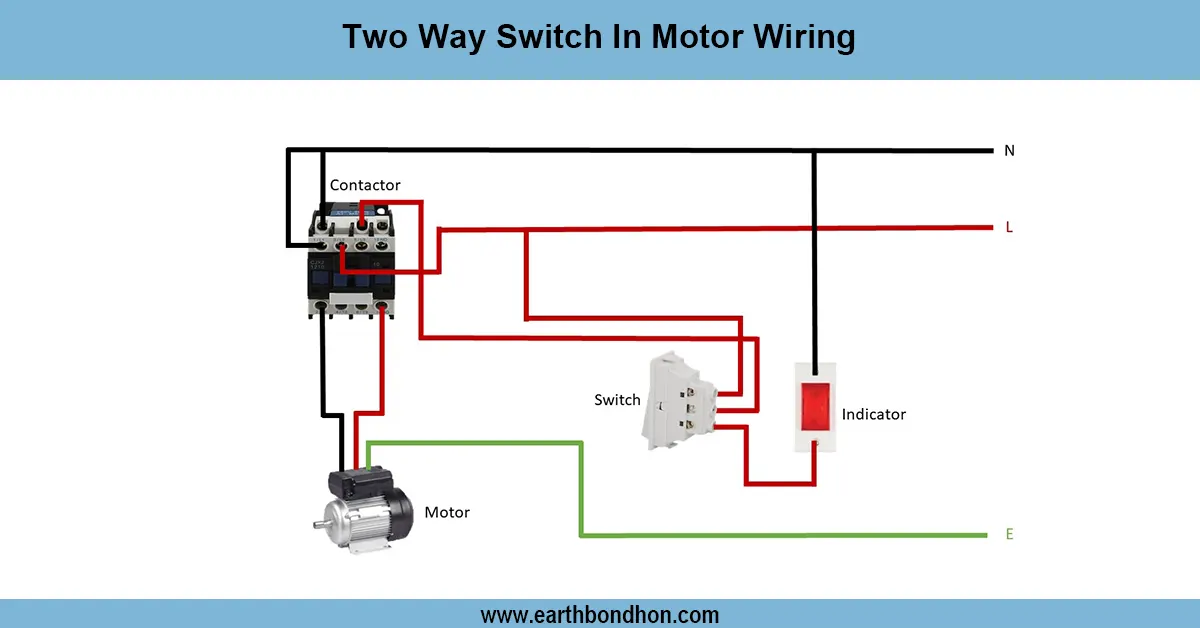
Motor control from two places
Wiring diagram for using two-way switches to control a motor’s ON/OFF operation from two different locations safely and efficiently.
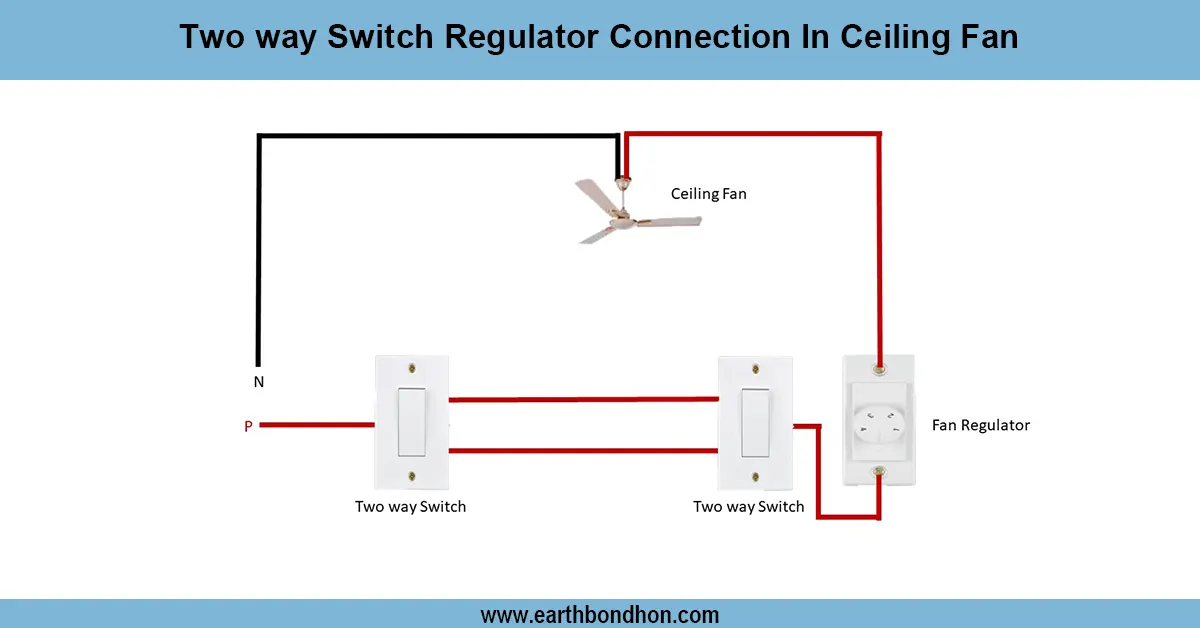
Ceiling Fan Regulator connection
Wiring diagram showing how to connect a two way switch with a regulator to control ceiling fan speed and ON/OFF from two locations.
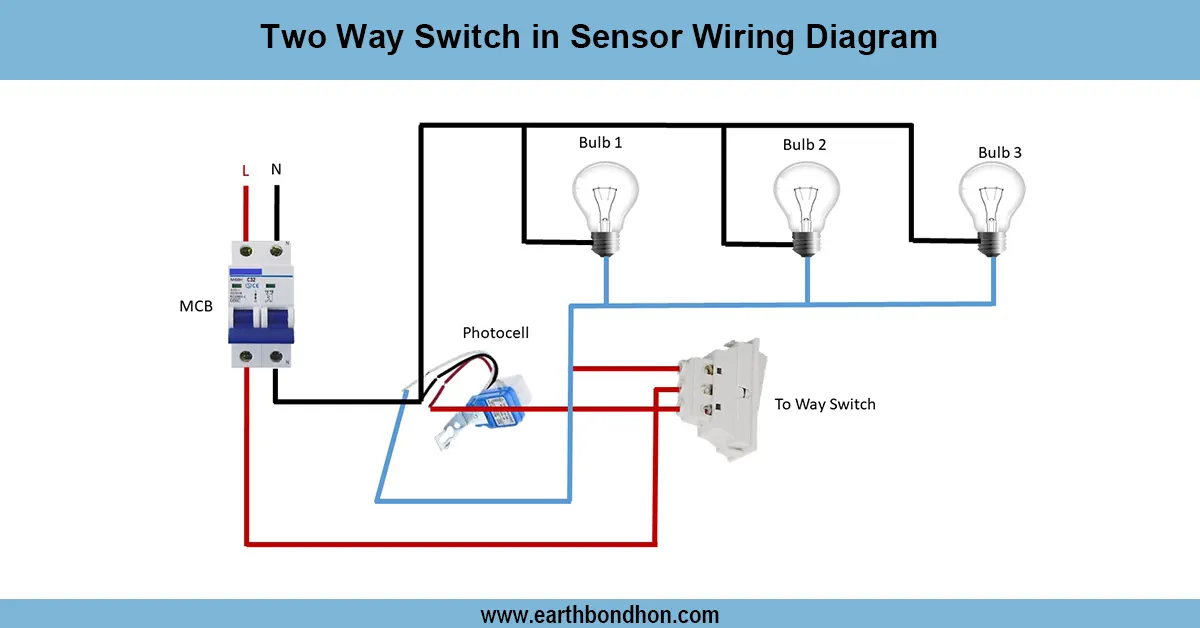
Two way light switch wiring
Wiring diagram showing how to connect a two-way switch with a motion sensor to control a light from two locations with automatic and manual override.